
Marketing can be a daunting landscape, especially when deciding between free and paid tools to boost your business. Each option has its own benefits and drawbacks, impacting your budget and effectiveness. Knowing which tools to invest in can streamline your efforts and maximise your returns. In this post, you will learn about the strengths and weaknesses of both free and paid marketing tools to make an informed decision that aligns with your goals.
Key Takeaways:
- Free marketing tools often come with limitations in functionality and support, making them suitable for small businesses or startups with constrained budgets.
- Paid marketing tools typically offer advanced features, comprehensive analytics, and dedicated customer support, which can lead to better overall outcomes for larger or more established businesses.
- Assessing the specific needs of your marketing strategy is necessary; a blend of both free and paid tools can optimise cost-efficiency and effectiveness.
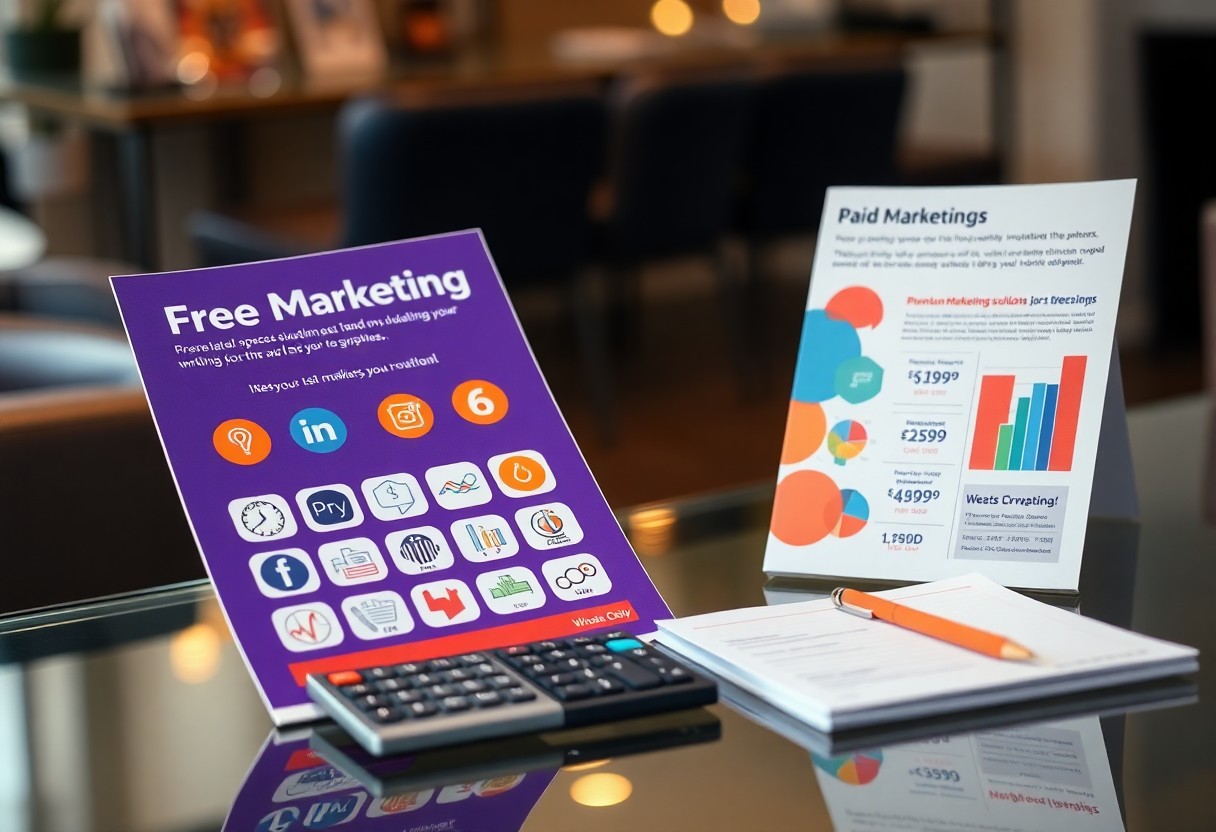
Overview of Free Marketing Tools
Free marketing tools offer a variety of options for businesses, enabling you to manage social media, analyse website traffic, and create content without incurring costs. Platforms like Canva, Hootsuite’s free version, and Google Analytics can significantly enhance your marketing efforts, allowing you to engage audiences and gain insights while staying within budget. These tools can be a smart starting point, especially for small businesses or start-ups looking to build their presence with limited resources.
Benefits of Free Tools
Using free marketing tools allows you to experiment and explore various strategies without financial commitment. You can test different platforms to find what resonates best with your audience while achieving value from vital features at no cost. This flexibility encourages innovation and learning, vital for honing your marketing skills.
Limitations of Free Tools
Despite their advantages, free marketing tools come with limitations that can hinder your marketing effectiveness. Often, they have restricted features, limited support, or impose usage caps that may not suit the needs of growing businesses.
Free tools frequently lack advanced features that paid counterparts offer, which can be a significant drawback. For instance, social media scheduling tools may limit the number of posts or platforms you can connect, affecting your reach. Furthermore, customer support is typically minimal; when issues arise, you may find yourself navigating problems without timely assistance. Additionally, data privacy and security can be concerns, as free tools may not provide the same level of protection as paid services, risking exposure of sensitive business information.
Overview of Paid Marketing Tools
Paid marketing tools are designed to streamline and enhance your marketing efforts, providing specialised features and comprehensive analyses that free tools often lack. These tools typically offer advanced functionalities—including better data tracking and customer segmentation—allowing you to maximise your return on investment. Understanding whether free resources suffice or if you should consider alternatives is necessary; for insights on this, explore Is free SEO enough, or should you invest in paid tools?
Advantages of Investing in Paid Tools
Investing in paid marketing tools provides you with a wealth of benefits that can significantly enhance your marketing strategies. These tools often include customer support, regular updates, and exclusive features that improve efficiency. You can take advantage of advanced analytics, which can yield deeper insights into customer behaviour and campaign performance, leading to more informed decisions.
Common Types of Paid Marketing Tools
Several types of paid marketing tools cater to different aspects of your marketing strategy. These tools include email marketing platforms, SEO tools, social media management software, and analytics tools. Each type serves a specific function, allowing you to focus on your marketing goals. For instance, email marketing software enables you to send targeted campaigns, while SEO tools help enhance your visibility on search engines. Understanding each type can help you choose the right tools for your needs.
| Email Marketing Platforms | Tools for creating and managing email campaigns. |
| SEO Tools | Software for improving search engine rankings and keyword analysis. |
| Social Media Management | Platforms to schedule and analyse social media posts. |
| Analytics Tools | Tools for tracking and measuring website performance. |
| Pay-Per-Click (PPC) Tools | Software for managing and optimising paid advertising campaigns. |
Exploring the array of paid marketing tools available can help you identify which solutions fit your marketing objectives. Depending on your needs, email marketing platforms allow for targeted outreach, while SEO tools provide necessary insights into web traffic. Social media management platforms streamline content posting across networks, and analytics tools deliver performance data crucial for optimisation. Explore each option to tailor your marketing strategy effectively.
- This information will help you select suitable tools for your specific needs.
| Content Marketing Platforms | Tools for managing content strategies and workflows. |
| A/B Testing Software | Programs for testing variations of campaigns for optimal performance. |
| Conversion Rate Optimisation Tools | Tools aimed at increasing customer interactions and engagements. |
| Influencer Marketing Platforms | Tools for finding and collaborating with relevant influencers. |
| Webinar Software | Platforms for hosting online seminars to educate and engage audiences. |
Understanding common types of paid marketing tools can help streamline your campaigns. Content marketing platforms allow for efficient content management, while A/B testing software enables data-driven decisions in campaign variations. Conversion rate optimisation tools focus on enhancing user experience, and influencer marketing platforms facilitate valuable partnerships. Webinar software can effectively engage your audience by providing immersive experiences. This information will empower you to make informed choices.
Cost-Benefit Analysis
Conducting a cost-benefit analysis is important when deciding between free and paid marketing tools. You need to weigh the initial investment against the potential return on investment (ROI). Consider factors like time saved, increased efficiency, and revenue generated. A practical approach is to list both tangible and intangible benefits, such as improved brand awareness or enhanced customer engagement, to determine if the advantages justify the cost.
Evaluating ROI of Paid Tools
When you invest in paid marketing tools, evaluating their ROI becomes vital to assess the value they bring. Look beyond immediate sales; consider metrics like lead generation, conversion rates, and customer lifetime value. A tool with a monthly subscription might seem costly, but if it significantly improves your lead quality or increases sales, the investment pays off in the long term.
When Free Tools May Suffice
Free marketing tools can be effective, especially for startups or businesses with limited budgets. They provide basic functionalities that might fit your initial needs without financial strain. Tools like social media schedulers or analytics platforms can deliver sufficient insights and support, allowing you to establish a presence before committing to paid options.
In many cases, free tools are more than adequate, particularly for small businesses or those just beginning their marketing journey. For instance, platforms like Google Analytics offer powerful data tracking capabilities at no cost, equipping you with insights that can guide your strategies effectively. Additionally, utilising free social media management tools allows you to engage with your audience and optimise posts without making any upfront investment. These options enable you to develop a foundation, assess your marketing effectiveness, and gauge when it might be necessary to transition to paid tools for enhanced capabilities.
Case Studies: Success with Free vs. Paid Tools
Examining case studies can illuminate the effectiveness of both free and paid marketing tools, showcasing how various businesses achieved success through different strategies. You’ll discover that while free tools can yield impressive results, paid options may deliver quicker returns on investment.
- Company A: Utilised free social media tools to boost engagement, increasing followers by 150% within three months, leading to a 30% rise in sales.
- Company B: Invested in a paid email marketing platform, achieving a 300% return on investment in just six weeks, with open rates exceeding 50%.
- Company C: Leveraged free SEO tools, resulting in a 200% increase in organic traffic over six months, enhancing brand visibility.
- Company D: Used a paid CRM solution, improving customer retention by 40% through targeted marketing campaigns driven by data insights.
- Company E: Embraced free content creation tools, generating 500,000 views on a blog post within a year, significantly expanding their audience reach.
For further insights, visit Free vs paid marketing tools: what’s worth the investment.
Notable Success Stories with Free Tools
Many businesses have thrived using free tools, showcasing their remarkable potential. One example includes a startup that leveraged free social media management software to increase brand visibility and engagement, resulting in a 200% growth in website traffic in just four months.
Notable Success Stories with Paid Tools
Paid tools have a history of delivering significant results for businesses willing to invest. A tech company, for instance, used a premium lead generation tool, boosting their conversion rate by 35% in a month, driving substantial revenue growth. This illustrates that while the upfront cost may seem high, the profitability stemming from increased efficiency and lead quality often justifies the expenditure.

Key Factors to Consider When Choosing Tools
When identifying marketing tools, several factors should guide your decision. Evaluating the functionality, usability, and integration with existing systems is vital. Additionally, consider the scalability to accommodate future growth, customer support, and user reviews to gauge satisfaction. A thorough understanding of your specific needs will streamline the selection process.
- Functionality and Features
- Usability and User Experience
- Integration Capabilities
- Scalability for Future Growth
- Customer Support and Reviews
Recognising the crucial criteria that align with your business objectives will help you make a more informed choice.
Business Goals and Target Audience
Your marketing tools should align closely with your business goals and the audience you aim to reach. Understanding your target demographics allows you to select tools that enhance engagement and drive conversions effectively. For example, if your target audience is primarily active on social media, opting for tools specialised in social media management will be beneficial.
Budget Considerations
Establishing a budget is vital when assessing marketing tools. You’ll need to balance the costs against the expected return on investment. Free tools can be excellent for small businesses or startups, yet often lack features that paid options offer. In contrast, paid tools may require a larger upfront investment but can save you time and yield better results in the long run.
When contemplating budget considerations, consider not only the initial costs but also the potential value they could bring to your marketing strategy. A tool that charges a monthly fee may ultimately lead to increased sales or enhanced brand visibility that offsets its price. Think about the long-term ROI versus the immediate expense, and remember that investing in quality tools like customer relationship management systems or advanced analytics can significantly accelerate your growth and improve efficiency.
To wrap up
Taking this into account, you should evaluate your business needs and resources when deciding between free and paid marketing tools. While free options may offer basic functionalities, investing in paid tools often provides enhanced features and support that can drive better results. Consider your budget and long-term goals to determine which tools align with your strategy. Ultimately, making a well-informed choice will enable you to optimise your marketing efforts and achieve your objectives more effectively.
FAQ
Q: What are the main differences between free and paid marketing tools?
A: Free marketing tools typically offer basic features with limited functionality, while paid tools provide advanced features, better support, and more extensive analytics. Paid tools often have a subscription model that unlocks additional capabilities, making them more suitable for businesses looking to scale their efforts.
Q: When should a business consider switching from free to paid marketing tools?
A: Businesses should consider switching when they find that free tools do not meet their needs, experience limitations in functionality, or require more robust support and features to achieve their marketing goals effectively.
Q: Are there any hidden costs associated with free marketing tools?
A: Yes, free marketing tools may have hidden costs such as limitations on usage, advertising fees for premium features, or the need to invest time in learning and troubleshooting. These costs can offset the benefits of using a free tool.
Q: How can businesses determine the ROI of paid marketing tools?
A: Businesses can determine the ROI by tracking key performance indicators (KPIs) such as customer acquisition cost, conversion rates, and overall revenue generated from campaigns using the paid tools. Comparing these metrics to the tool’s cost will provide insights into its value.
Q: Is it possible to achieve effective marketing with only free tools?
A: Yes, effective marketing can be achieved using only free tools, particularly for small businesses or startups with limited budgets. However, the effectiveness may depend on the specific goals of the marketing strategy and the resources available for effort and management of these tools.


